


Before Winter
finds the Weak Spot
Fall preparation that matters most in a Michigan residence often happens after the maintenance companies have left.
By Kurt S. LaFave
Founder & Chief Sentinel
By late fall, a well-run home can look completely prepared. The pool is closed. The irrigation company has been out. The furnace has been serviced. The generator runs its weekly test. The gutters are clean. Snow removal is arranged. Everything appears handled, and yet some of the most expensive winter problems begin with a sentence no homeowner wants to hear:
“We thought someone else took care of that.”
About the Author

Kurt LaFave, Founder & Chief Sentinel of The Sentinels. He brings more than four decades of experience across commercial & residential property management, real estate, privately owned property portfolios, renovations & property operations.
That is the problem with a substantial residence. There may be ten excellent people caring for ten different parts of it. Winter only sees one house. The question isn’t, “Did everyone come?” It is, “Is the property actually ready?” There is a meaningful difference.
A heating contractor can properly service the heating equipment without knowing that a little-used guest wing is about to be turned down for the winter. The irrigation company can correctly winterize the sprinkler system without being responsible for the water line serving an outdoor kitchen. The generator technician can confirm that the generator starts without answering which parts of the house will remain functional during a real outage. The roofer may look at the roof. The gutter company may clean the gutters. Neither may be looking at where all that water eventually goes.
This is why fall preparation for a large private residence should end with something more than a stack of completed invoices and checklists. It should end with a property that has been looked at as a whole.
Start with water. It is remarkably good at finding mistakes.
Michigan winter has a way of turning a small water oversight into a very expensive discovery. Most homeowners know the obvious items: irrigation needs to be winterized and exterior plumbing cannot simply be forgotten. The less obvious question is:
Where else does water live on the property?
Perhaps there is an outdoor kitchen. A pool house. A garden sink. A fountain. A detached garage. A guest house. A hose connection tucked behind landscaping that no one has thought about since June. On a large property, there can be a surprising number of places where water enters, exits, collects or remains. The fall review should account for them.
Someone should be able to tell the homeowner, with confidence, which exterior water systems remain active, which have been shut down, which have been drained and where the important shutoffs are located.
If nobody can answer that without making three phone calls, the property is not fully ready.
“The heat is on” is not the same thing as knowing the whole house is protected.
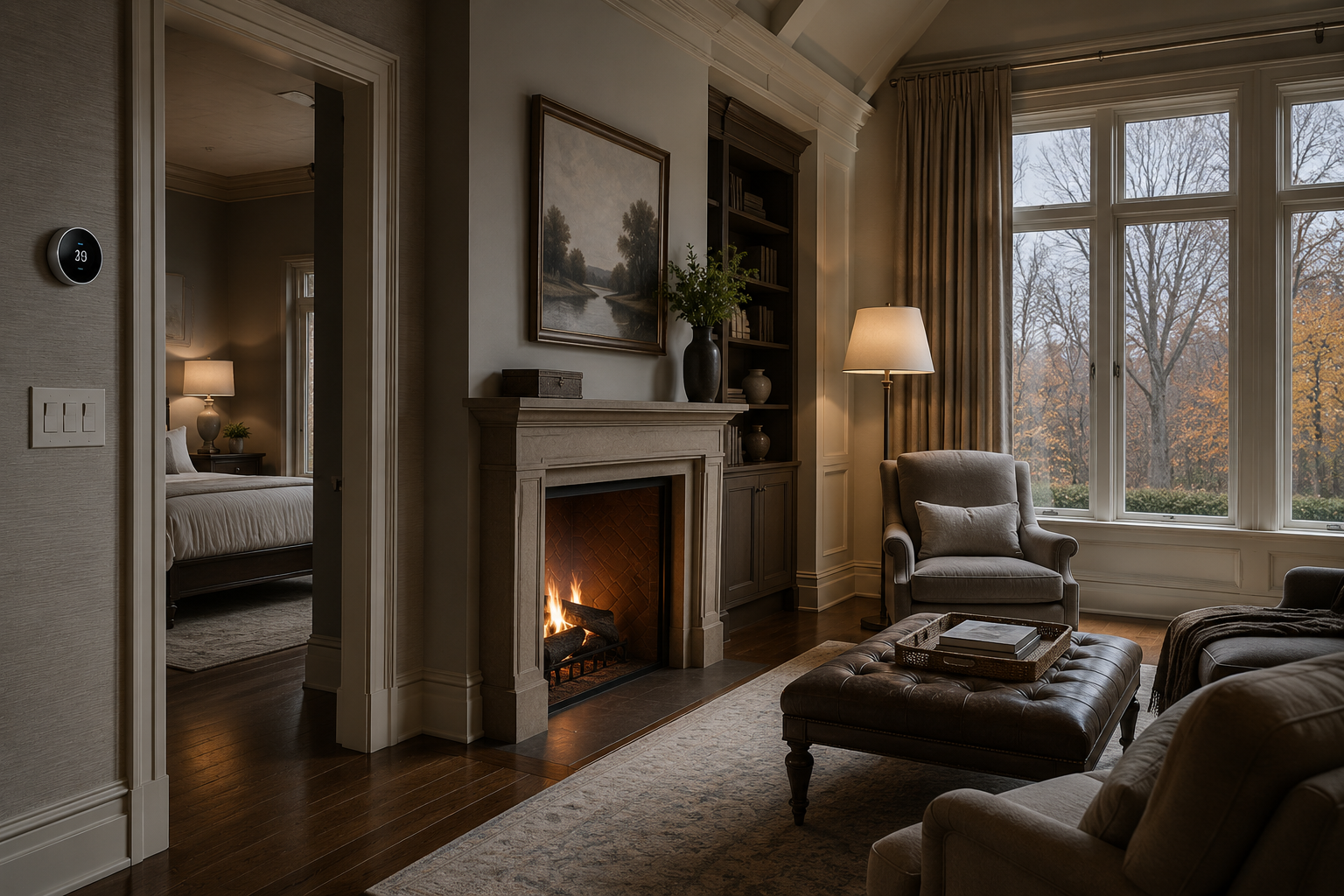
Large houses behave differently in winter. One thermostat does not tell the story. There may be several heating zones, radiant floors, garages containing plumbing, guest rooms that are seldom used, finished spaces over garages, detached buildings or entire portions of the residence that operate differently once the family’s seasonal routines change.
A heating contractor should absolutely service the equipment, but someone should also consider the house from the owner’s point of view
What happens to this property when we leave for two weeks in January
That is a different question. Which rooms remain heated? What happens in the least-used wing? Are automated temperature settings changing? Who receives an alert if a monitored space becomes too cold? Does anyone notice if a normally heated area stops behaving normally.
The objective is not to create anxiety about the house. It is to remove the reasons for anxiety before the owner boards the plane
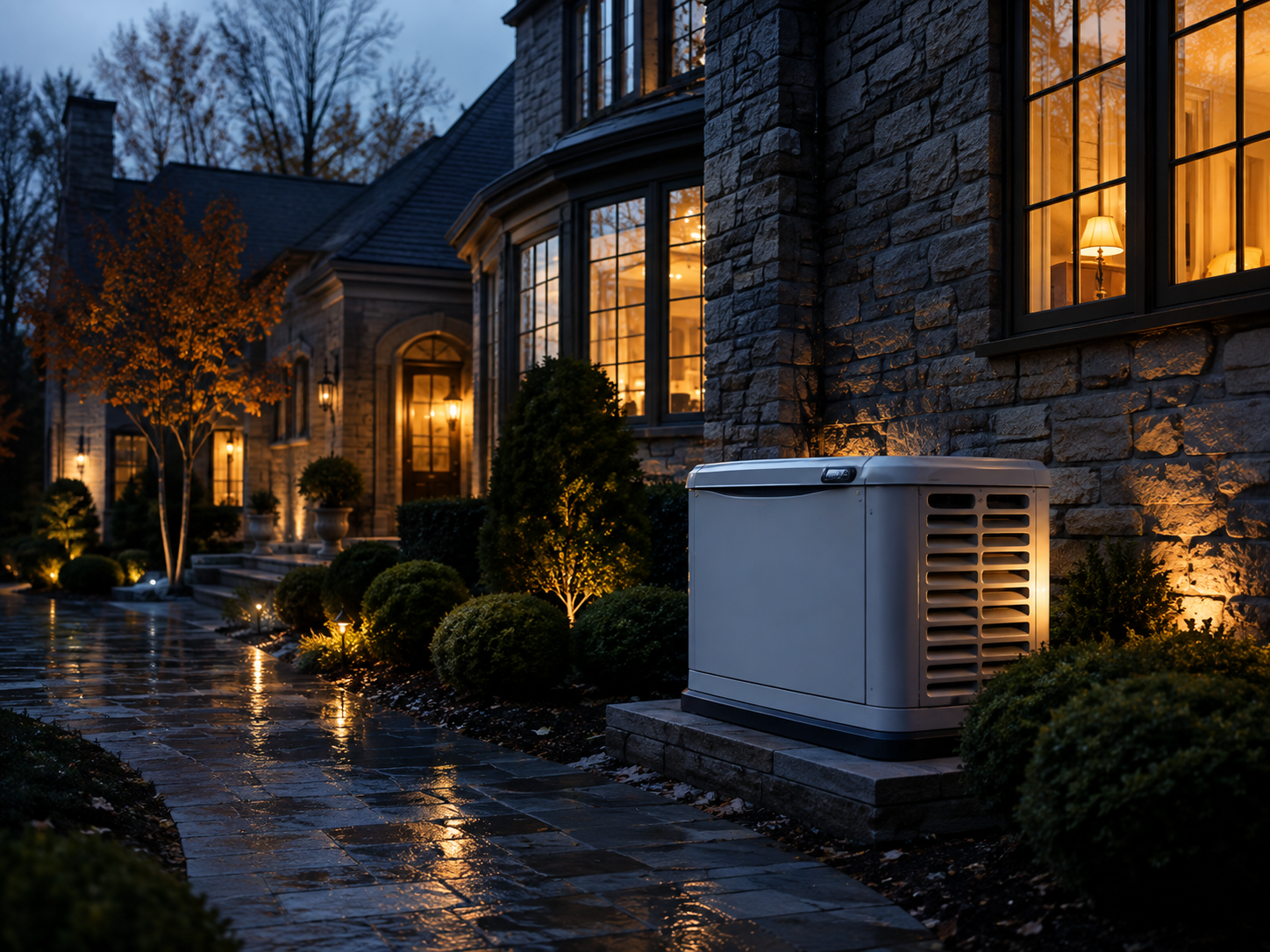
Your generator running on Tuesday afternoon doesn’t necessarily tell you what happens during a January outage.
This is one of those details that sounds technical until the power goes out. Many standby generators exercise themselves periodically. You hear them start. They run. Everything sounds reassuring, but a routine exercise does not always duplicate a real utility outage or prove that every system the owner expects to have backup power will actually have it.
What matters to the homeowner is much simpler:
If we lose power for twelve hours during a hard freeze, what keeps working?
The heating system? Sump pumps? Well equipment? Security? Refrigeration? Internet and communications? The gate? Critical lighting? The answer will be different from one residence to another.
A qualified generator or electrical professional should handle the technical testing. The estate-level job is making sure someone understands the result. A homeowner should not discover the limits of the backup plan during the outage itself.
Follow the rain farther than the gutter.
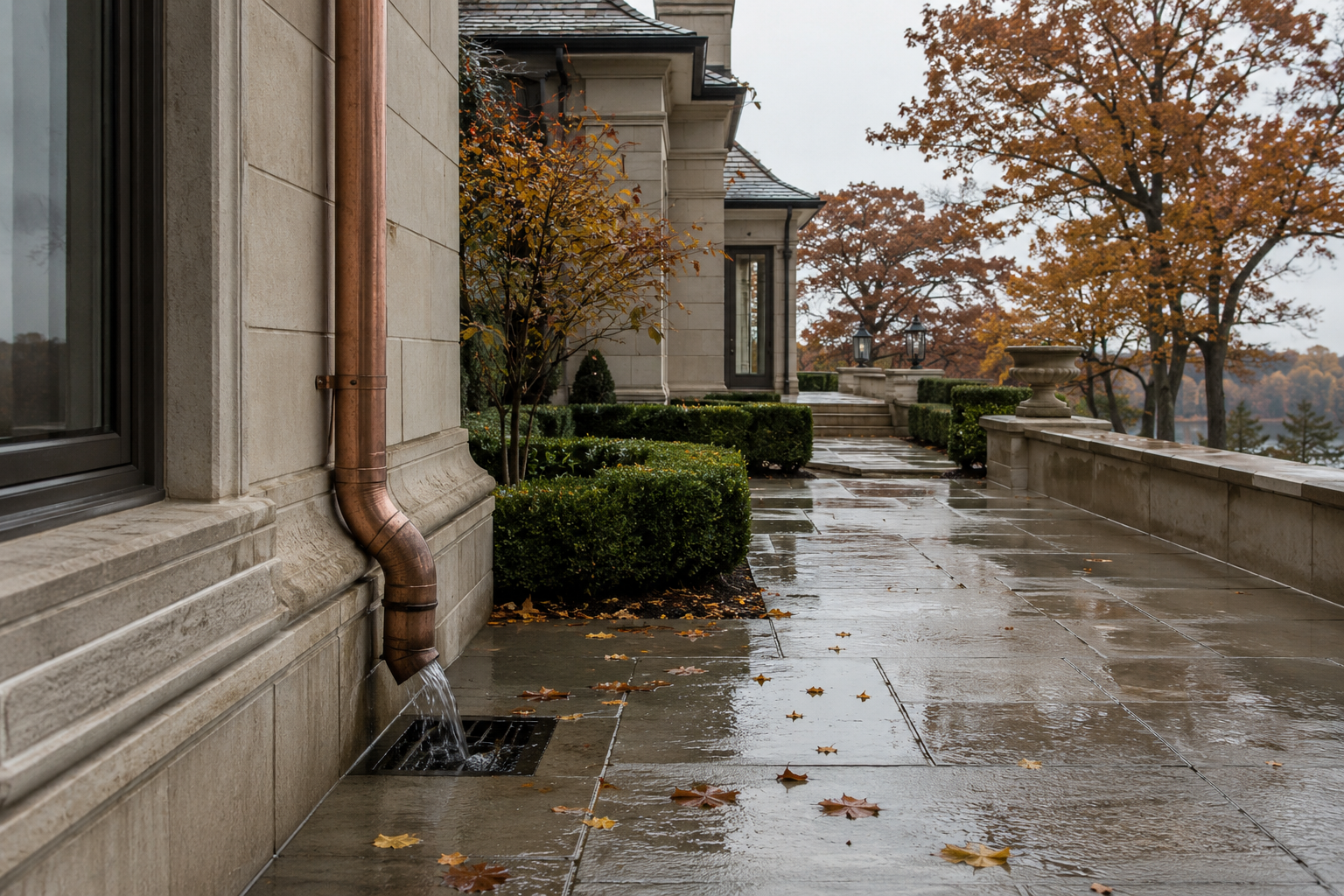
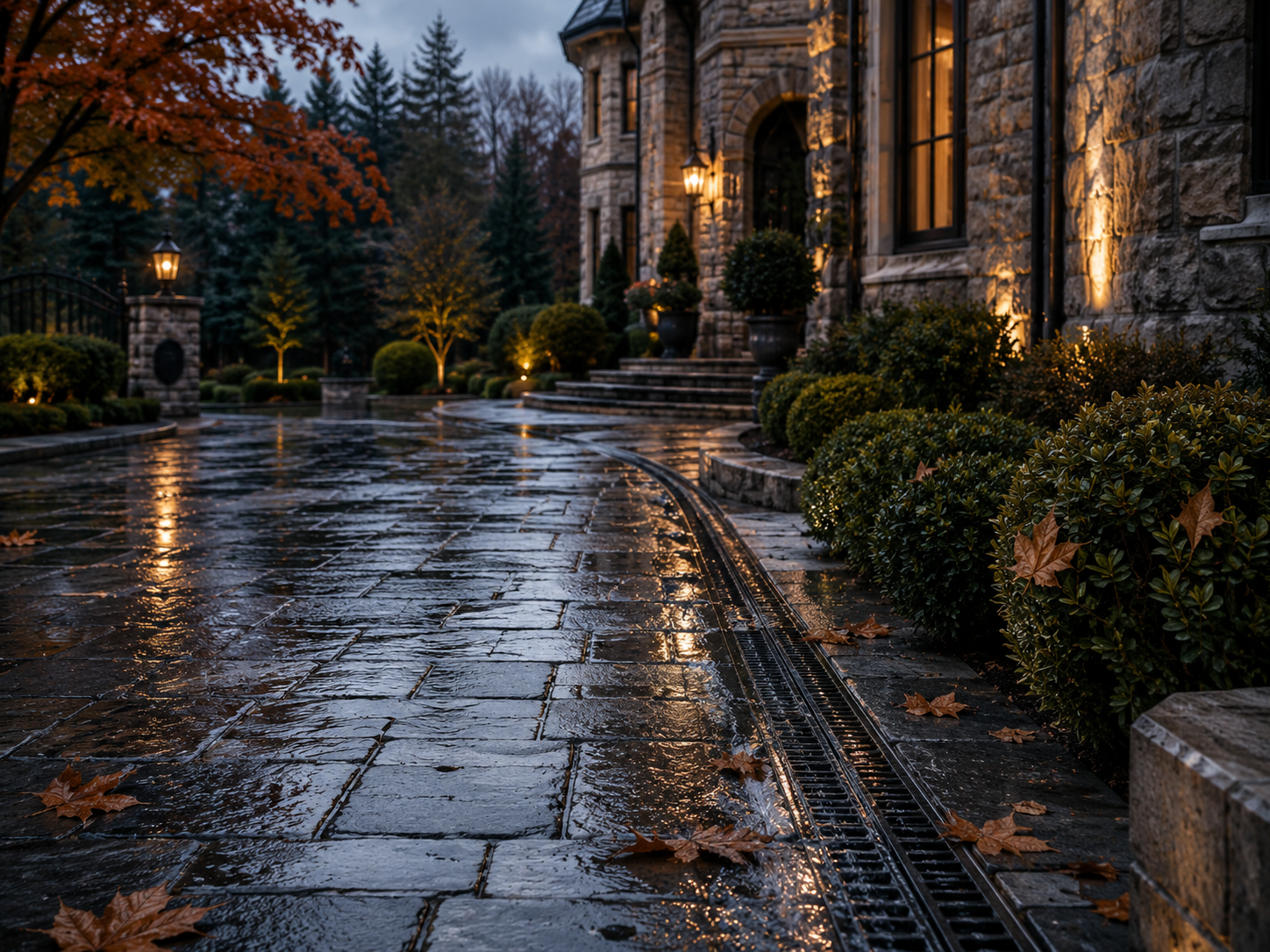
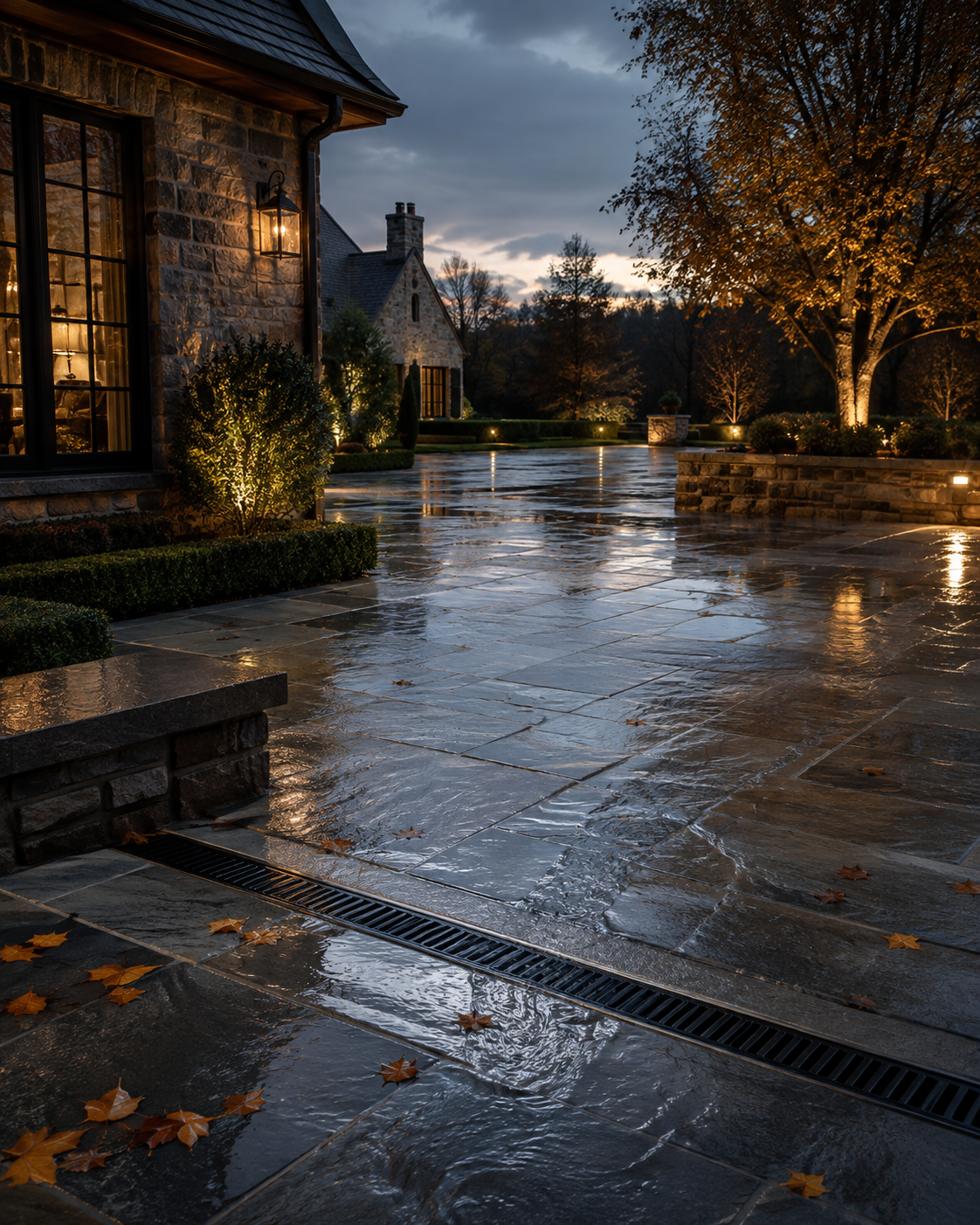
“Gutters cleaned” sounds complete. Sometimes it isn’t. A complicated residence may have roof valleys, flat or low-slope areas, hidden drainage points, courtyards, terraces and several places where rainwater and melting snow are supposed to move away from the structure.
The more useful question is not simply whether debris was removed. It is: Where does the water go next?
Does it leave the roof? Does it move away from the foundation? Is it collecting on a terrace? Does a downspout discharge into a place that will become an icy problem later? Is there a roof drain in a less-visible location that never made it onto someone’s fall checklist?

This is one of the simplest ways to understand estate stewardship and property coordination:
A vendor has responsibility for a component.
Someone else needs responsibility for the outcome.
One of the most overlooked winter risks is the room nobody is using.
The guest suite, carriage house, the room above the garage, the pool house, a secondary residence visited only occasionally. Spaces change when people stop using them.
For second homes and residences left partially unoccupied during winter, that makes monitoring especially important. Who receives the temperature alert or the water alert? Who can enter the property and is authorized to call a contractor?
If a problem occurs at 6:30 on a Sunday morning, does the plan consist of an actual protocol, or are several people searching their phones for the right number?
A sophisticated property should not become less protected simply because its owner is somewhere else.


Then there are the things homeowners understandably assume someone already checked
Fireplaces, chimneys, and flues before the first serious use. Exterior lighting before the days become very short. Gates and access controls before snow and ice arrive. Tree limbs that could become a problem during winter storms. Snow-removal access and where the snow is going to be piled. Is the driveway heated and is the snow-melt system actually prepared to operate?
The list itself is not particularly interesting. The coordination is. Because every one of these items may already have a capable professional associated with it.
The failure happens when nobody sees the intersection.
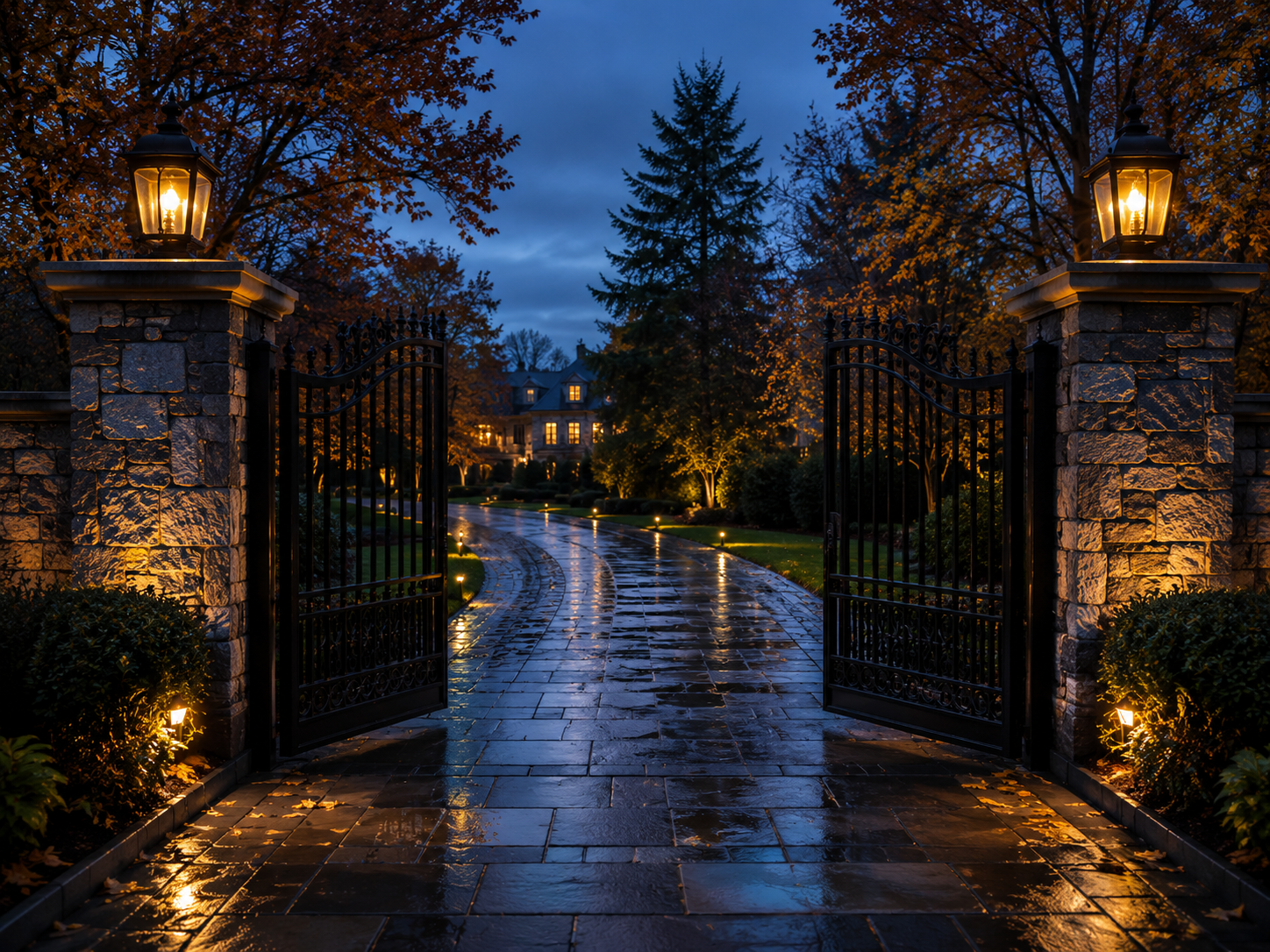
The snow contractor needs access through the gate, and the gate needs power. The driveway equipment may depend upon controls that have not operated since last winter. The service technician may need to reach a mechanical room while the family is away.
A large residence does not function as a collection of independent conveniences. It functions as a system.
The difference between “done” and actually done.
At The Sentinels, we think there is a higher standard for seasonal work.
A contractor arriving is not the standard. An invoice is not the standard. Even “completed” is not the standard. The useful questions come afterward.
Was the work actually completed as expected?
Was anything discovered?
Does something need repair before winter?
Did the contractor recommend a follow-up?
Does another part of the property depend upon this system?
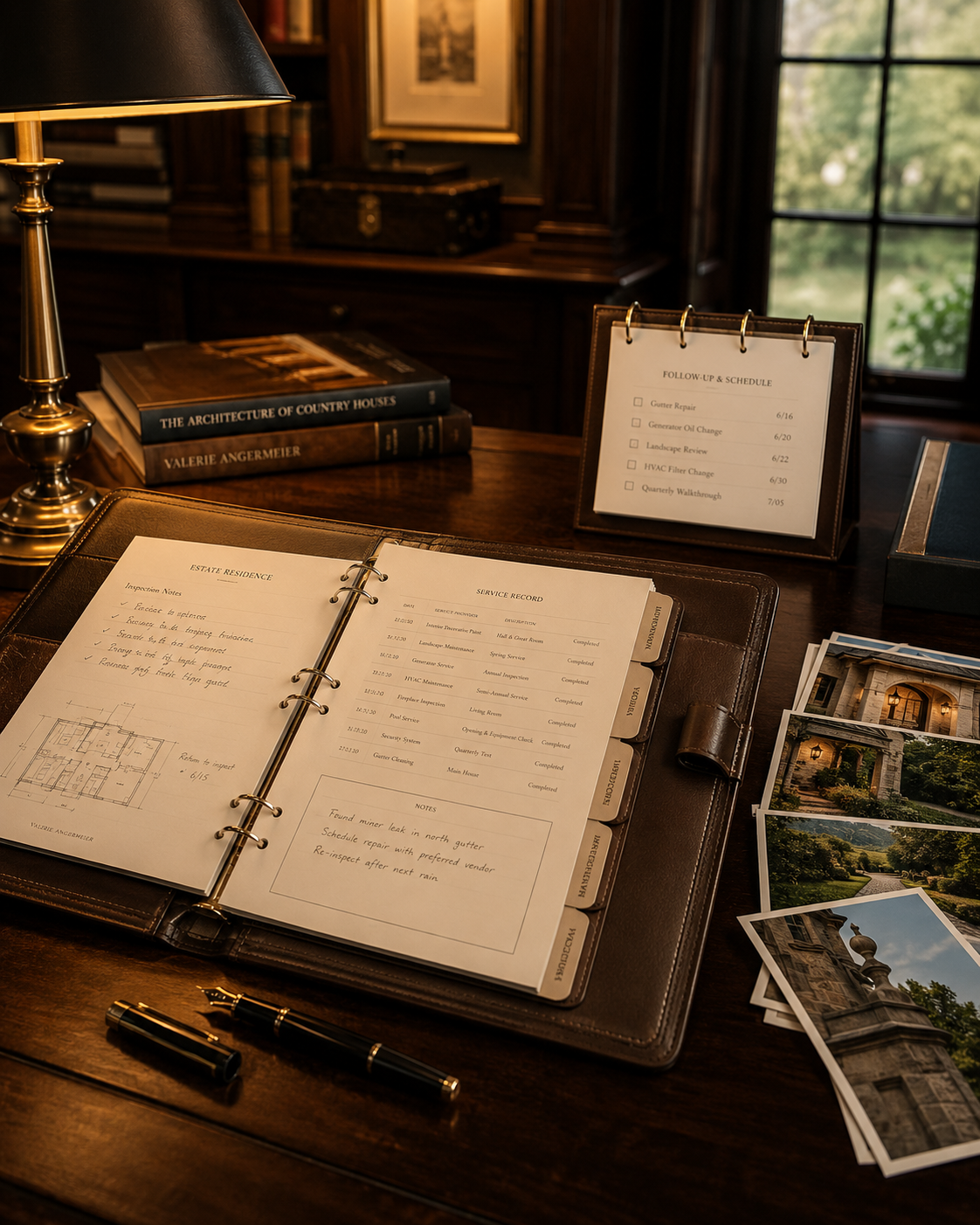
Was the condition documented?
If there is a problem three months from now, will anyone remember what was observed today?
This is where a well-managed property becomes noticeably easier to own. The house develops a memory. There is less rediscovery and less searching. No more wondering who handled something last time. Less of the owner becoming the person connecting every dot.

The real fall checklist is confidence.
A substantial residence will always require specialists and good ones are invaluable. The objective is not to replace them, it is to make certain somebody is looking above them.
Across Bloomfield Hills and other significant Michigan properties, winter readiness is less about completing twenty unrelated maintenance chores than establishing one simple fact:
The residence is prepared for what happens next.
The water has been accounted for. The heat has been considered throughout the property. Backup systems have a known purpose. Drainage has been followed. Seasonal spaces have been addressed. Vendors know their roles. Open issues have owners and the records are current.
And if something goes wrong during a January weekend, nobody has to begin by asking who might know where the shutoff is.
That is estate stewardship.
For owners who prefer their residence to be ready before the season demands it, The Sentinels provides private property coordination and estate-level oversight across select Michigan communities.