

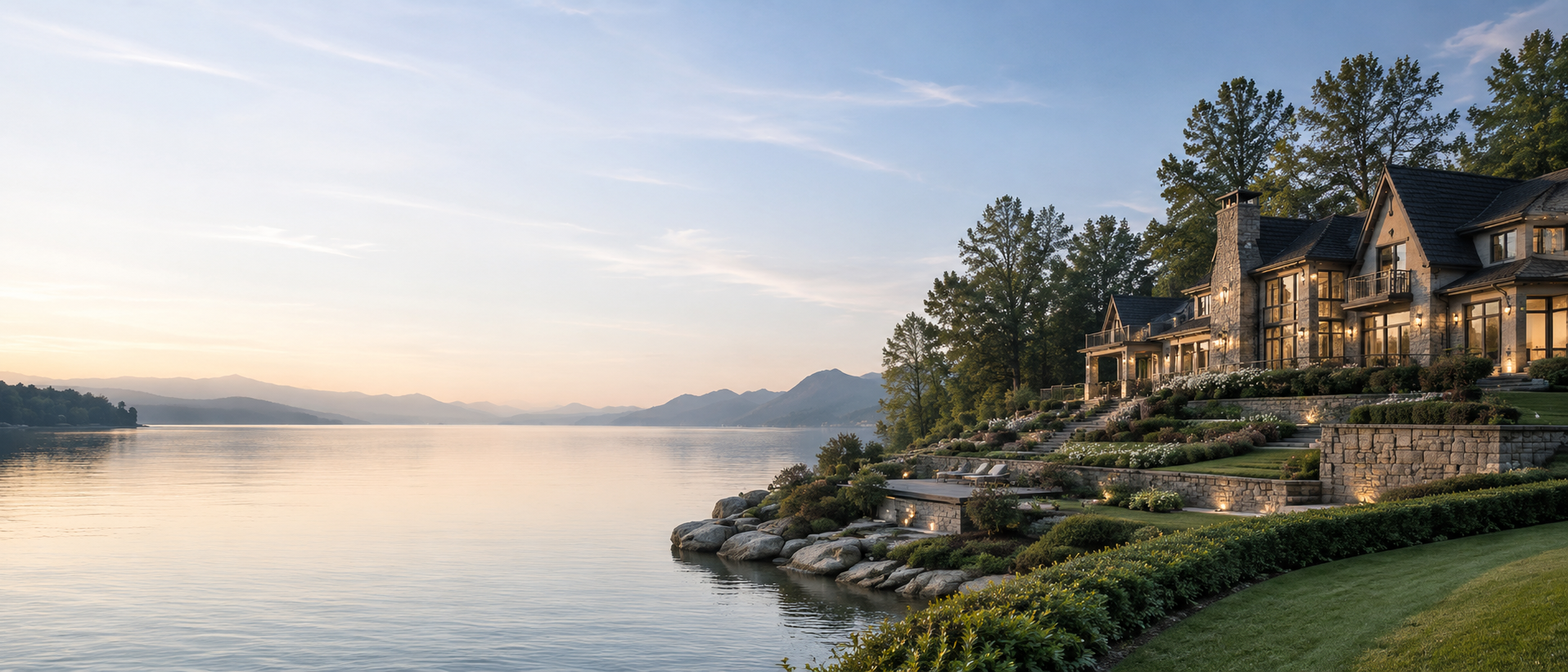
The Luxury of being
Left Alone
April 2026
How it begins
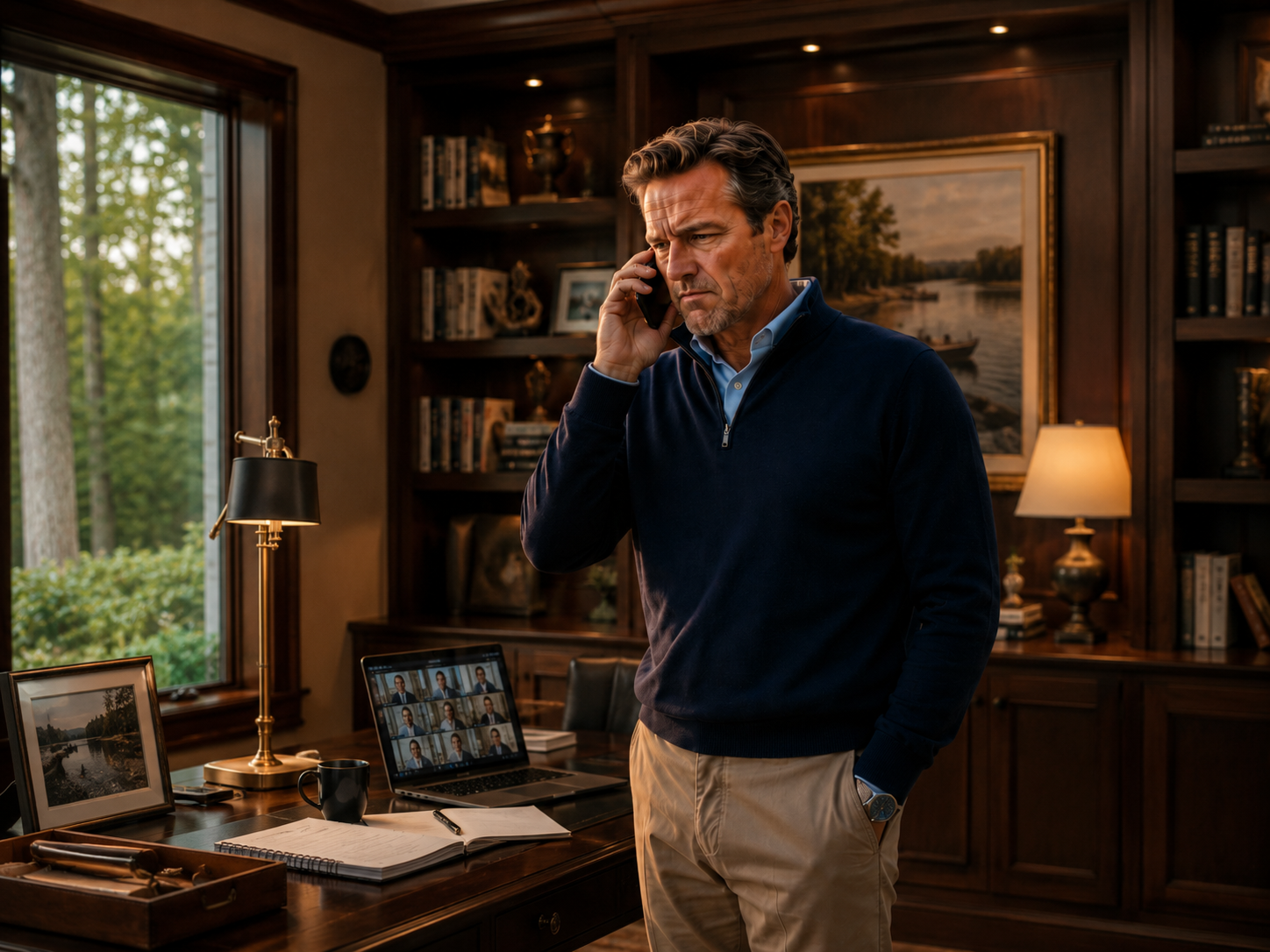
The call comes in while he is boarding a flight.
It is not an emergency, per se, but that is what makes it so irritating. The landscaper is at the lake house and noticed water pooling near the lower drive. He thinks it may be a drainage issue, but he is not sure. He can send pictures. He can also “have a guy look at it,” if that helps.
Across the country, his wife gets a text from the housekeeper. The guest suite has a faint stain under one of the windows. It may have been there before. It may be new. No one knows.
By noon, the roofing company has sent over a proposal. It’s three paragraphs long, expensive, and just vague enough to require another call. The generator service is due too, but the reminder went to an old email address. Somewhere, buried in a folder, there is probably a record of who handled it last year.
This is how beautiful homes take over a day.
Not with a disaster, but with many decisions.
For owners of luxury homes, private estates, lake homes, vacation properties, and second homes, the problem is rarely a lack of help. There are always names. The landscaper, the roofer, the cleaning crew, the pool company, an electrician someone trusted two summers ago. Not to mention the contractor who came highly recommended, then became impossible to reach once the work was finished.
The issue is not access to vendors, it’s that the owner is still the one holding the whole thing together.
The house has a way of finding you
A high-end home is designed to feel effortless. The approach is beautiful. The rooms are quiet. The systems are hidden. The work disappears behind stone, wood, glass, landscaping, and good lighting.
That disappearance is part of the magic and it is also part of the problem.
When something goes wrong, the owner is suddenly pulled behind the curtain. The home that was supposed to feel peaceful starts asking operational questions.
Who should be called?
Is this urgent?
Is this the same issue as last time?
Is the proposal complete?
Should this vendor have access while we are away?
Did anyone take photos before the repair was covered up?
These are not questions most homeowners want to answer between meetings, flights, dinner reservations, family plans, and everything else already pulling at their attention.
Still, the questions arrive, because a home doesn’t care that the owner is busy.
That is why luxury home coordination, estate oversight, and trusted home watch services matter. The value is not only in checking on the property. The value is in knowing what to notice, what to document, who to call, what to question, and when to bring something back to the owner with a clear recommendation.
A vendor list is not a plan
Many luxury homeowners have a contact for everything. That sounds organized until the house actually needs something.
A list of names does not remember which vendor was careful with the marble floors. It does not know who left the gate open, who showed up late twice, or who gave a clean explanation instead of a rushed guess. It does not connect the small water stain in June to the drainage note from last September. It does not look at an invoice and remember what the original scope promised.
A vendor list is useful. It is not stewardship.
Stewardship is the part that happens between the names. It is the judgment, history, timing, documentation, and follow-through that keeps a property from becoming a series of disconnected errands. That is often the missing layer in a high-value home.
The owner has people who can do the work. What they may not have is someone watching the work. For estate managers, private homeowners, and families with multiple properties, this is where trusted vendor coordination becomes essential. It is not enough to hire a contractor, schedule a service visit, or approve a repair. Someone must understand whether the work fits the property, whether the vendor is the right match, whether the scope is clear, and whether the issue has truly been resolved.
The cost no one puts on the invoice
Of course, the repair has a price, but the interruption has another one.
A homeowner may not mind paying for quality work. In fact, most would rather pay well once than pay poorly twice. What becomes exhausting is the time spent getting to the right decision.
The first call. The second opinion. The estimate that needs clarification. The vendor who says, “I’ll get that over to you,” then does not. The service note no one saved. The warranty question that comes up months later. The creeping suspicion that the same problem has been addressed before, but no one can prove what was done.
That is where the home becomes expensive in a way money alone does not solve. It takes attention and it takes time.
For people who have built demanding lives, time and attention are not a small things. Attention is protected. Time is scheduled. Time and attention are the resources money cannot simply buy back after they have been wasted.
The right property oversight does not only protect the home. It protects the owner’s attention and gives them the gift of time.
This is especially true for second homes, seasonal homes, lake properties, and vacation homes that are not occupied year-round. When the owner is not there every day, small issues need a trusted local point of contact. Someone must notice what changed, coordinate the next step, meet the vendor if needed, and make sure the homeowner is not dragged into every detail from another city, another state, or another country.
The difference between maintained and managed well
A home can be maintained and still feel chaotic.
The lawn can be cut. The pool can be opened. The HVAC can be serviced. The roof can be patched. The windows can be cleaned. Each task can be completed, one by one, and the owner can still feel like the home is constantly asking for more.
That is because maintenance handles tasks and oversight manages context.
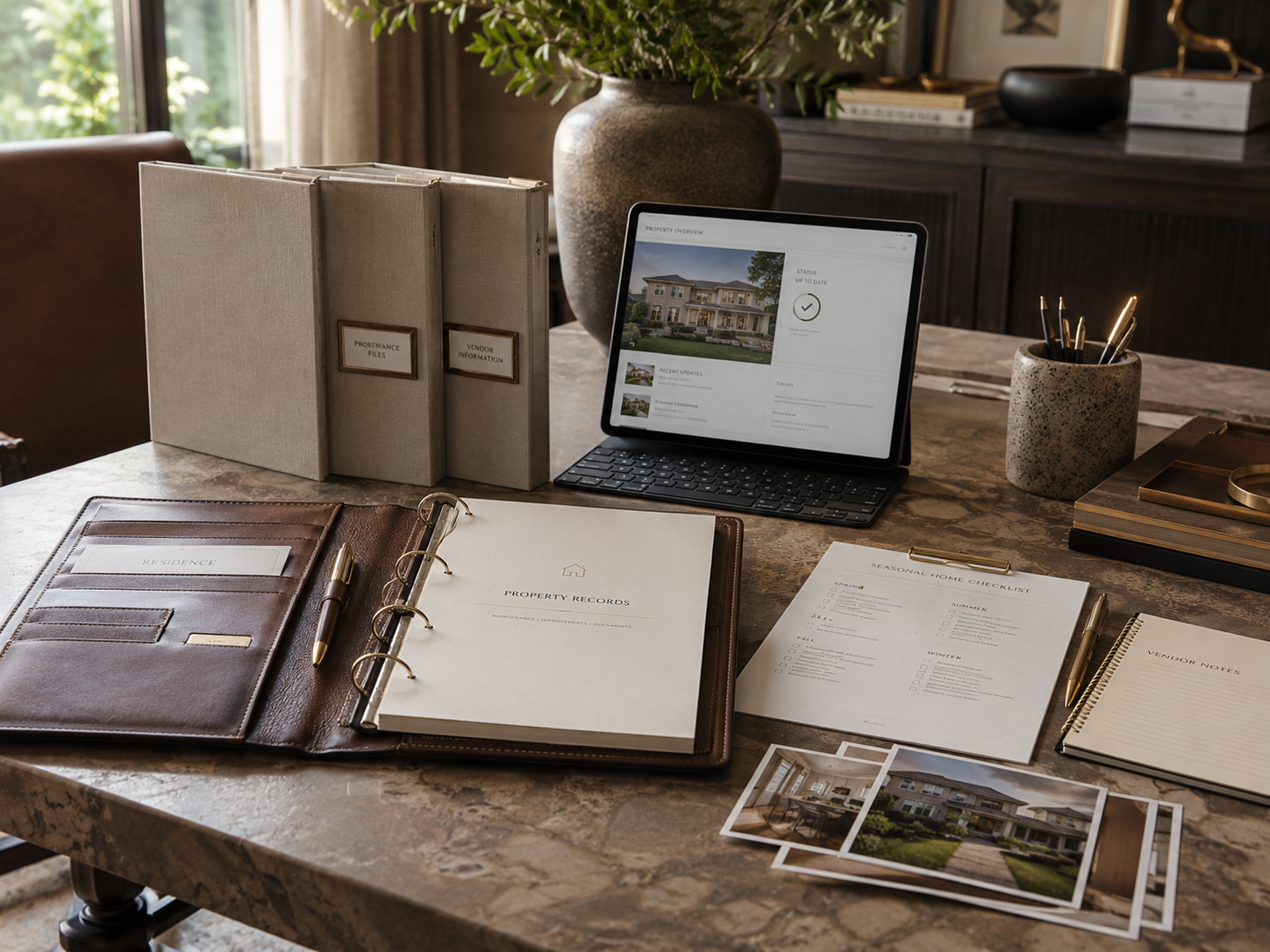
A well-managed home has memory. It has records that can be found quickly. It has vendors who are chosen for the property, not just the task. It has seasonal needs addressed before the calendar becomes urgent. It has someone asking whether a problem is truly resolved, or simply quiet for now.
This is where details matter most and where a coordinator is mandatory.
A vague proposal is questioned by the coordinator before it becomes a vague repair.
A coordinator treats a recurring issue as a pattern, not an isolated nuisance.
A coordinator ensures photos are taken and saved before work disappears behind walls, ceilings, landscaping, or paint.
Access is arranged by the coordinator without turning the owner into the gatekeeper.
The next step is tracked by the Coordinator before it becomes another thing to remember.
None of this is dramatic.
That is precisely why it is valuable.
The best home oversight is often invisible to the homeowner. They simply experience fewer interruptions, fewer loose ends, and fewer moments where the home reaches into their day without warning.
What “handled” should feel like
Handled does not mean the owner is uninformed. It means the owner is not burdened with every loose thread.
A handled home does not send the owner searching through old emails to remember who serviced the generator. It does not require a half-hour phone call to understand whether the gutter issue was actually fixed. It does not ask the owner to interpret a contractor’s vague language or decide, without context, whether a quote is reasonable.
A handled home gives the owner clear information at the right level.
Here is what happened.
Here is what we recommend.
Here is what needs approval.
Here is what can wait.
Here is what has already been documented.
That kind of clarity changes the relationship between the owner and the home.
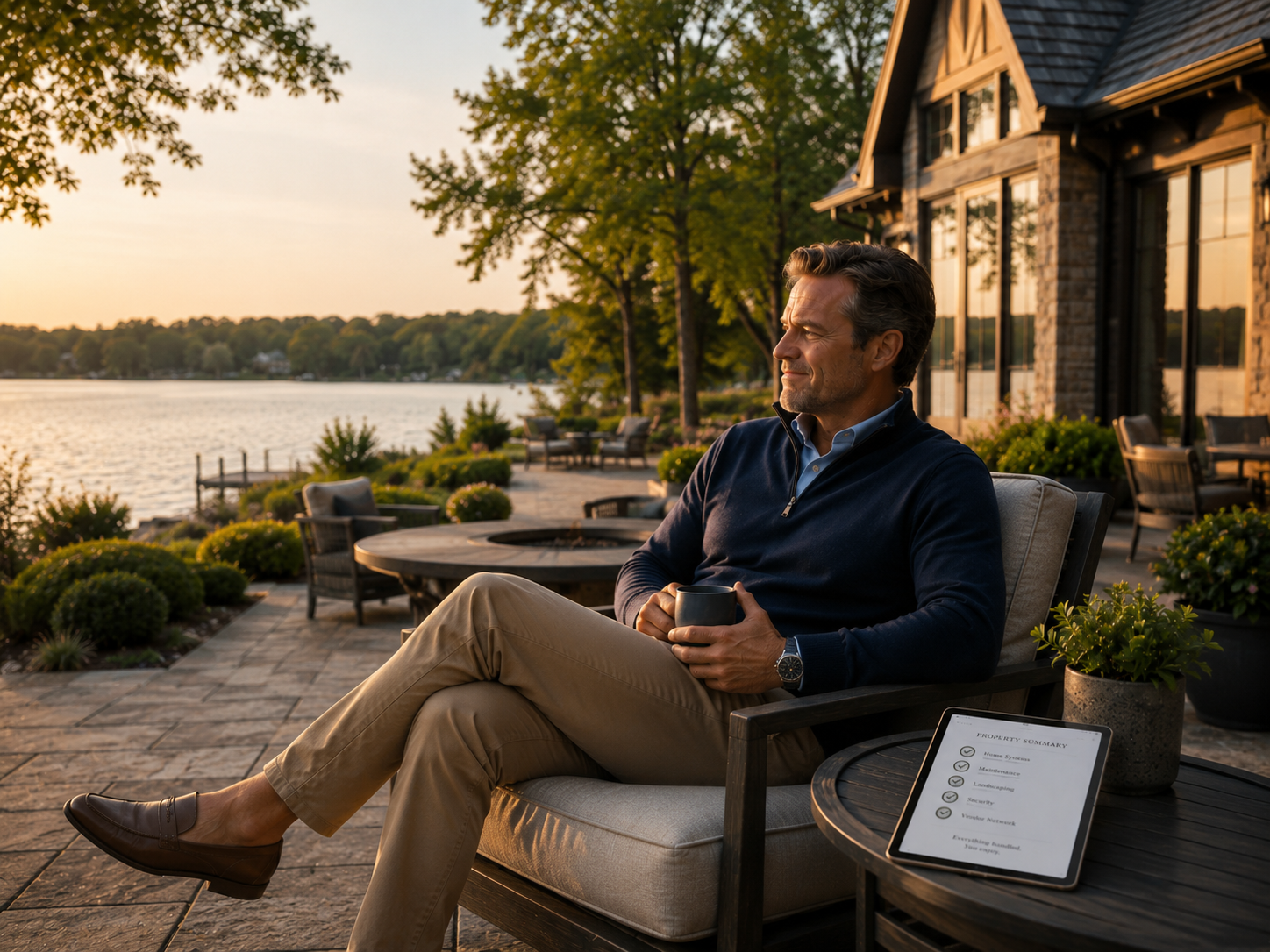
The home stops feeling like something to supervise and becomes a place to return to and relax.
This is the standard high-end homeowners should expect from luxury property support, private estate services, and home maintenance coordination. The goal is not more noise, more vendors, or more reports. The goal is the right information, organized clearly, delivered at the right time.
The Sentinels stand behind the quiet
The Sentinels exists for homeowners who want the standard of their home protected without having every detail return to their desk, phone, or calendar.
Our work lives in the space most homeowners are tired of managing: vendor coordination, property history, repair documentation, access, seasonal readiness, follow-up, and the judgment required to know what deserves attention next.
The work is practical, but the value is deeply personal.
It means the owner is not chasing everything and everyone.
It means the same issue is not treated like a new mystery every season.
It means vendors are not chosen casually for a home that deserves better than casual.
It means the property has someone watching the whole picture.
For owners with multiple homes, frequent travel, demanding schedules, or properties that require a higher level of care, that kind of oversight is not a luxury extra. It is the difference between owning a beautiful home and being managed by one.
The Sentinels provide trusted support for luxury homeowners who need help with home watch services, estate care coordination, vendor management, seasonal maintenance planning, property documentation, and the ongoing details that keep a high-value home cared for behind the scenes.
Why The Sentinels’ Journal exists
The Sentinels’ Journal is where we will share what careful homeowners should know before problems become expensive, before vendors become frustrating, and before small details turn into lost time.
Some articles will focus on the questions to ask before approving work. Others will explain what should be documented after a repair, how to think about seasonal home maintenance, how to spot weak vendor communication, and why certain small issues deserve more attention than they appear to at first glance.
The point is not to turn homeowners into property managers.
The point is to help them recognize when their home needs a steadier hand behind the scenes.
Because the real mark of a well-kept home is not that nothing ever goes wrong.
Something always will.
The mark of a well-kept home is that the owner does not have to be pulled into every decision, every delay, every vendor issue, and every forgotten follow-up for the home to be cared for properly.
That is the luxury of being left alone.
That is the work behind the work.
That is why The Sentinels stand watch.